Warm the milk to around 95-104°F / 35-40°C and pour the warm milk into the bowl of a stand mixer. Sprinkle yeast and two tablespoons of the sugar over the milk. If using active dry yeast, let this sit for around 5-10 minutes until it becomes foamy; if using instant yeast, this step can be skipped. 180 g whole milk, 7 g instant yeast
Add in the flour, remaining sugar, pumpkin puree, eggs, spices, and salt. Fit the stand mixer fitted with a dough hook attachment and mix on low speed to form a thick dough. 500 g all-purpose flour, 65 g granulated sugar, 125 g pumpkin puree, 2 large eggs, 2 teaspoons pumpkin spice, ¾ teaspoon salt
Add in the softened butter, a few cubes at a time, and keep mixing on medium speed for around 10-15 minutes until the soft dough is smooth and strong and it pulls away cleanly from the sides of the bowl. 55 g unsalted butter
Kneading by hand - Use a wooden spoon and mix the dough until it forms a shaggy dough ball. Once it forms a dough ball, pull it onto a floured surface and knead in the butter, a few cubes at a time. The butter will make it a bit of a sticky dough initially. Knead by hand for around 10-15 minutes until it becomes a strong and smooth dough. If you need a break, take it. The dough responds well to resting time.
First rise Once kneaded, form the dough into a smooth ball. Transfer the dough to a lightly greased bowl and cover with it.
Let the dough rise in a warm place until doubled in size, around about 1 hour. The exact time the dough rises will depend on your room temperature.
The dough can also be covered tightly and refrigerated for up to 16 hours.
Shaping After the first rise, punch down the risen dough and pull it from the bowl onto a lightly floured work surface. If the dough has come from the fridge, it will be very stiff. You can let it warm up to room temperature for 10 minutes first before shaping.
Using a rolling pin, roll the dough into a ½ inch / 1.3cm thick shape. Use a doughnut cutter or a glass to cut out the doughnuts
Place the shaped doughnuts on parchment paper. Use kitchen scissors to cut around each so that each doughnut is sitting on an individual piece of parchment. The doughnuts can now be transported into the oil on parchment paper, which makes transferring them easier. If you don't have parchment paper, you can transfer the dougnuts without it.
Any remaining dough can be rolled out and cut again, but let it rest for 10 minutes to rest the gluten and stop the dough from springing back.
Gently cover and leave the doughnuts to rise slightly for around an hour until doubled in size. This timing is dependent on room temperature – the warmer the room, the faster they’ll rise.
When they have risen, pour the frying oil into a deep fryer or pot and heat it to 356°F/180°C. The oil in the pan should be at least 3 inches deep.
When the oil is hot, fry the doughnuts in it for 2-3 minutes, around 60-90 seconds per side. Use metal tongs to remove the pieces of parchment paper from the oil. It will be much less time for the smaller donut holes.
Don't add too many at a time because they will lower the oil temperature. If it drops too much your donuts won't fry well and will absorb too much oil. Don't let the temperature surpass 375°F / 190C.
After frying, use a slotted spoon to remove the doughnuts from the oil, then place them on paper towels to drain.
Topping If using a cinnamon topping, combine the granulated sugar and cinnamon in a small bowl. 200 g superfine sugar, 200 g superfine sugar, 2 tsp ground cinnamon
Add the doughnuts into the sugar bowl and coat them on all sides.
If you are glazing them in a bowl, combine powdered sugar and vanilla enough to create a thick but pourable glaze. 120 g powdered sugar, 3-4 Tablespoons milk, 1 teaspoon vanilla extract
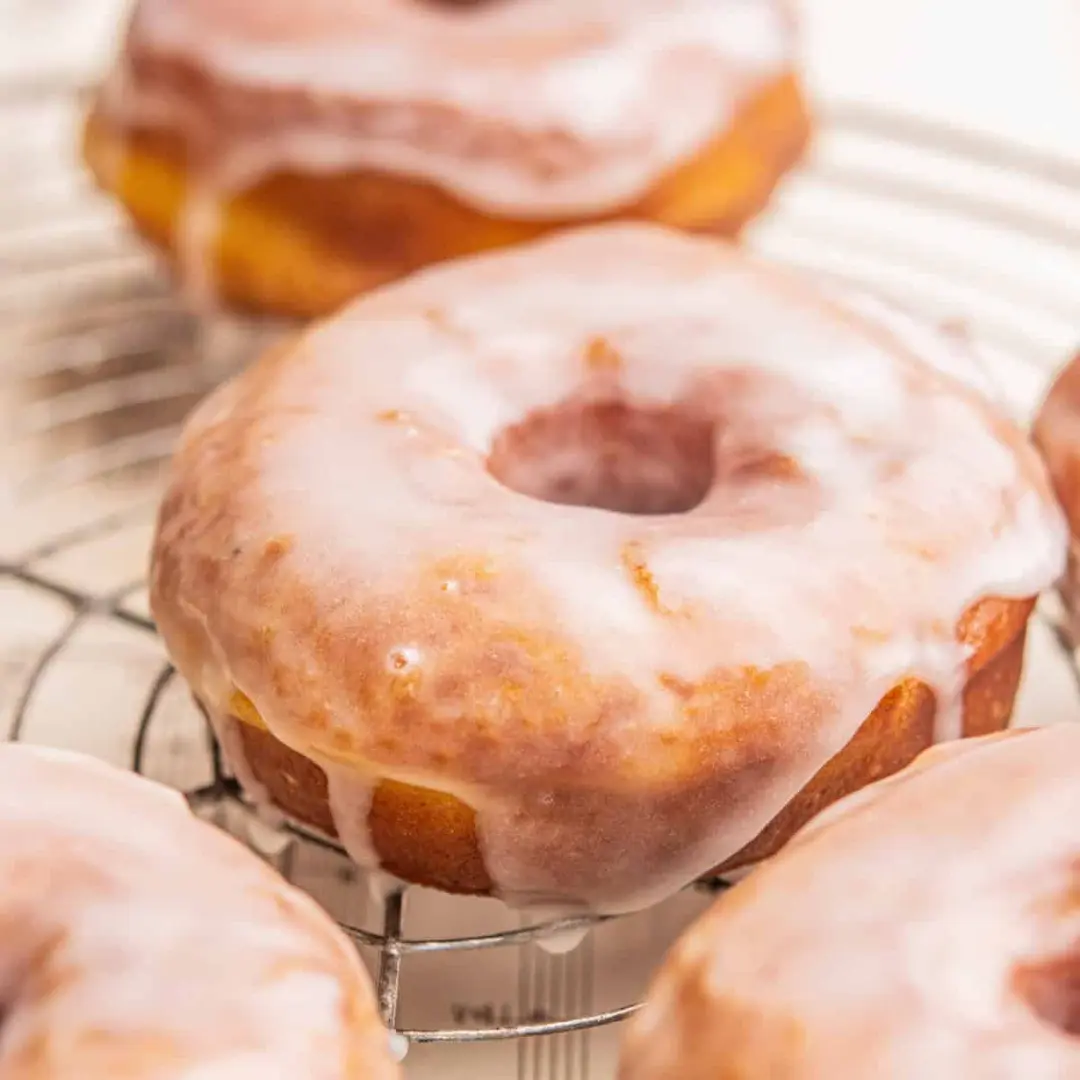
When the doughnuts come from the oil, place them on paper towels to soak up excess oil. Let them cool on a cooling rack for 5 minutes, then dip the still-warm donuts into the glaze. Let them dry on the rack.